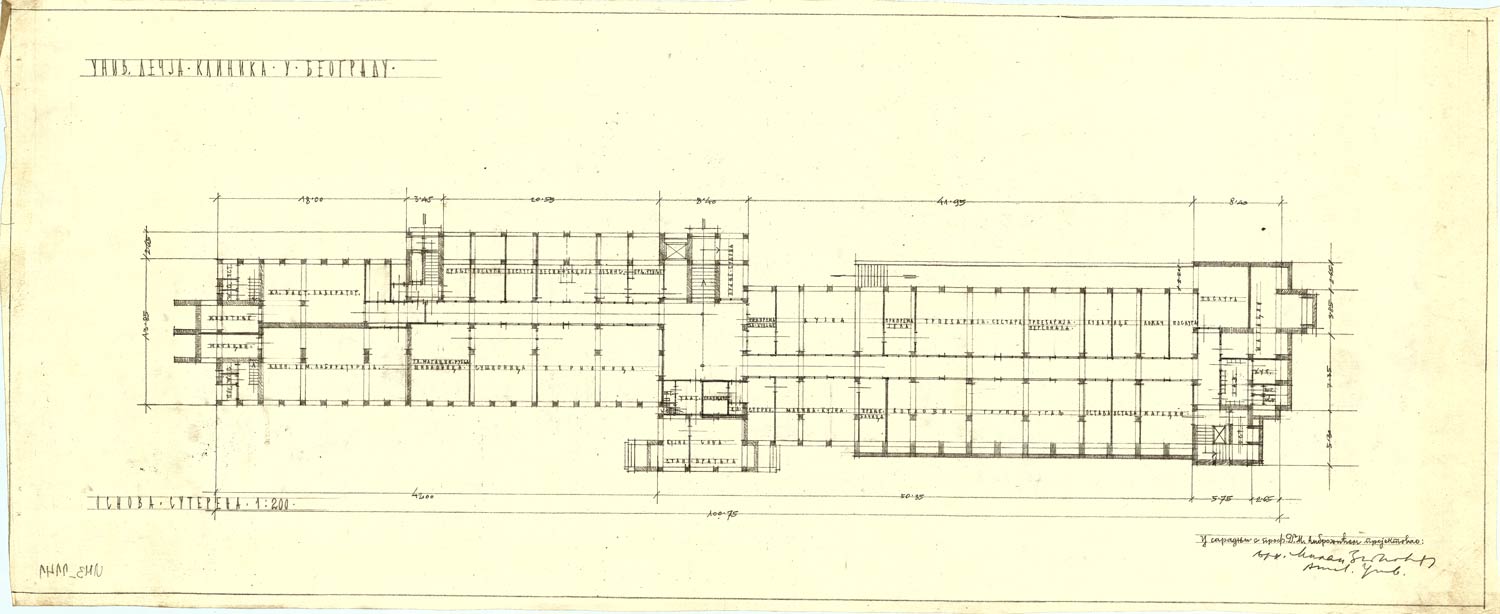
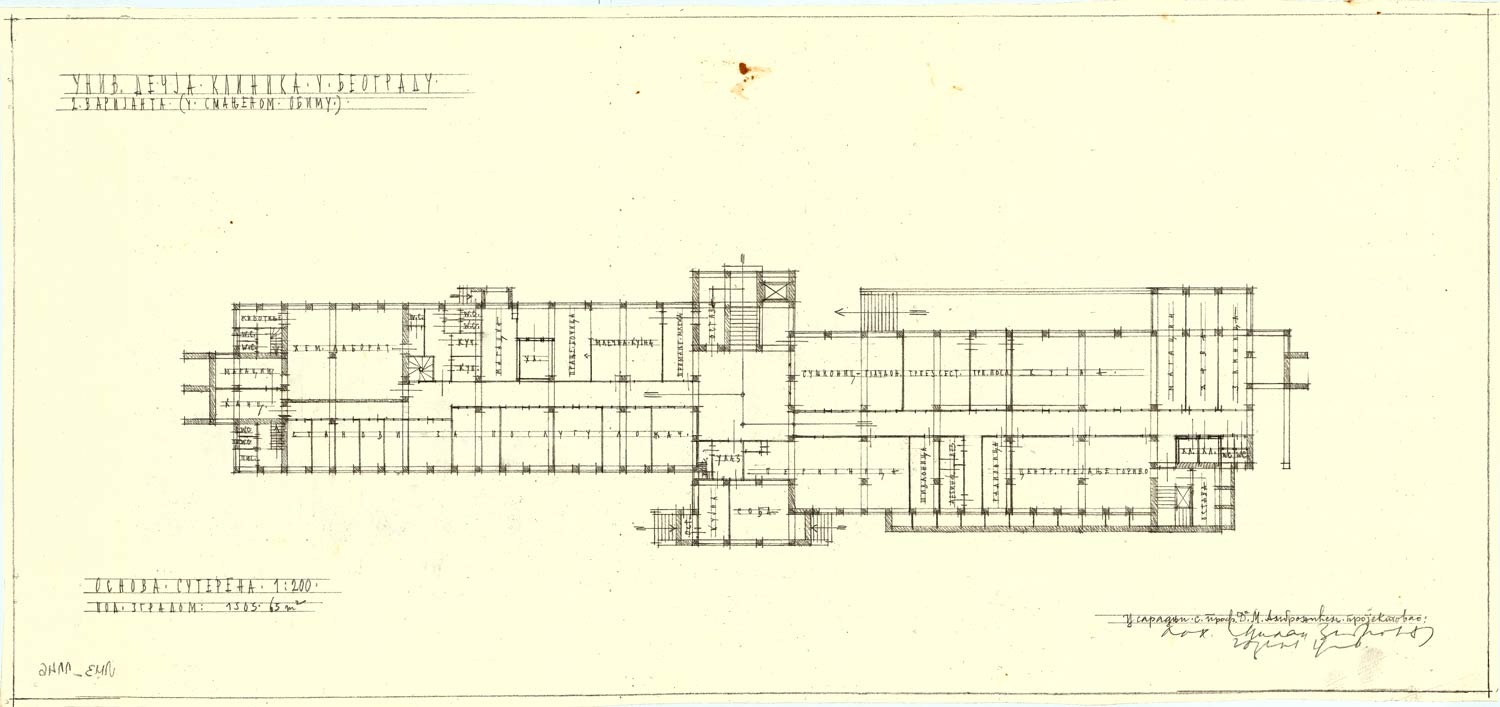
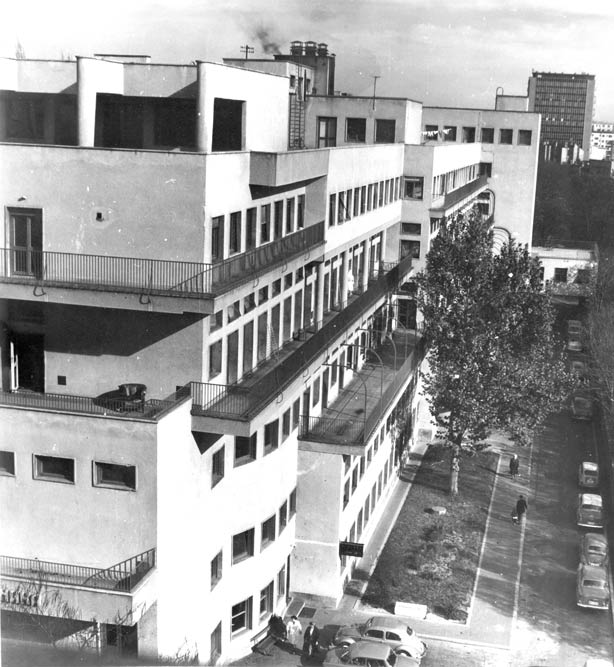
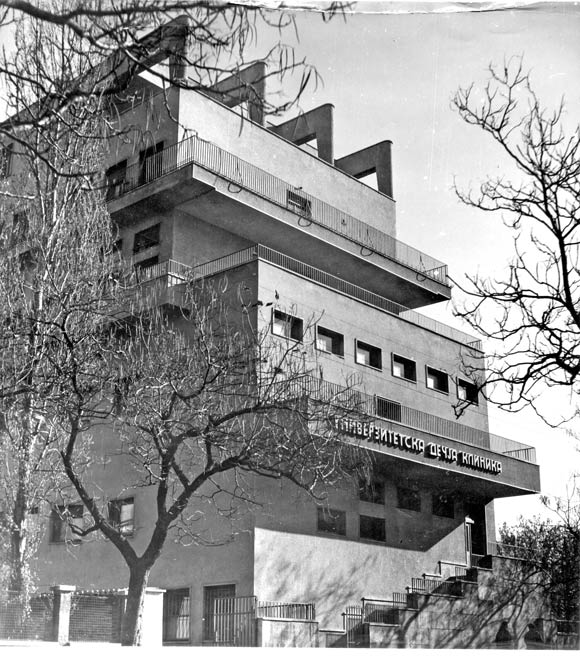
Founded in 1924, immediately after the formation of the Faculty of Medicine in Belgrade, the University Children’s Clinic was an independent health institution for which a new purpose-built building was erected between 1936 and 1940 according to a project by Milan Zloković. After being placed in its own space exclusively designed for health purposes and with the installation of the necessary medical equipment, the children’s clinic was able to fully develop its basic function. With the unique design procedure, the buildings of the University Children’s Clinic stand out in recent Serbian architecture with the consistent application of architectural modernism. With the integral treatment of the inner space and the outer membrane, Zloković perfected the already applied principle of three – dimensional modeling of the space, with the exception that in this case the outer structure created by subtraction and addition from the basic volume is also included. At that time, modern architecture was already largely accompanied by the features of sunny and ventilated spaces hygienically adapted to the user, especially in buildings such as hospitals and sanatoriums, so Zloković also assigns terraces oriented to the southeast to hospital rooms. The harmonization of the shape and dimensions of the space with the size of the opening was a special design procedure and a novelty in Serbian modern architecture, which the architect Ivan Zdravković described in the words: “Every opening for lighting a room is placed where it should be placed and in the size it illuminates.” Hence, all the openings are not the same size and are asymmetrically arranged, but that does not matter that the whole look still gives a harmonious and pleasant impression. There is a certain rhythm between the openings and surfaces, as well as between unequal heights and various roof finishes”. Its design and construction took place during the period of full artistic and creative maturity of architect Zloković, who introduced Serbian architecture into modern European architecture. According to the assessment of architectural historiography, the University Children’s Clinic represents the peak of the development of modernism in Serbian architectural practice.